Payday banned
Borrowing in New Hampshire: What State Law Allows
New Hampshire closed the door on triple-digit payday loans but left a wide one open for car title loans. Here is what each kind of lender may charge and how long a creditor has to come after you.
By Lendmira Editorial Team Updated 6 min read
- Payday and small loans
- 36% APR cap
- Title loan interest cap
- 25% a month
- Time limit to sue on debt
- 3 years
- Wages protected weekly
- $362.50
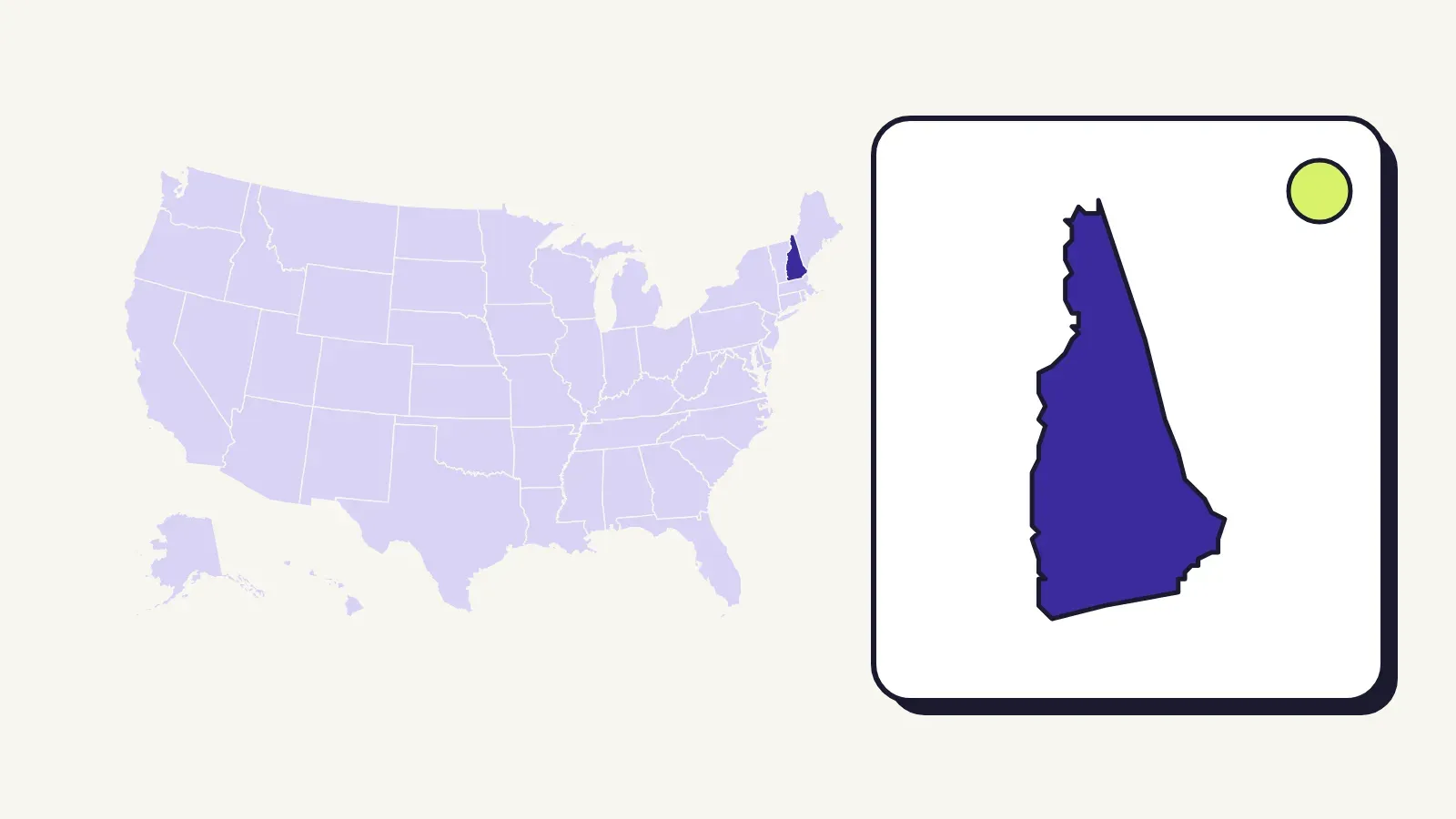
The short version
New Hampshire caps payday loans and other small loans from licensed lenders at 36% APR, and a payday loan can't exceed $500. Car title loans are the exception: lenders may charge up to 25% a month, which is about 300% a year. A creditor generally has three years to sue, and wages can be garnished only after a court judgment, with the first $362.50 a week protected.
New Hampshire lending rules at a glance
Payday loans exist, but at 36%
New Hampshire still licenses payday lenders under RSA 399-A, the state's small loan law, but it holds them to the same 36% APR ceiling as other small loans. At that price the classic two-week payday loan, with its triple-digit APR, can't be made, and that keeps most traditional payday lenders out of the state.
If you do find a licensed payday lender, the statute sets tight terms:
- The loan can't exceed $500, and the lender may charge interest only, no other fees.
- The lender can't renew, refinance or extend the loan, and you can't be obligated on more than one at a time.
- You can't get a payday loan if you have an open payday or title loan, or had one in the previous 60 days.
- You can cancel by the close of the next business day, and you can prepay in full or in part.
An online lender that offers you a payday loan at a much higher rate either isn't licensed in New Hampshire or is lending through an arrangement the state hasn't approved. Treat that as a warning sign and read about common loan scams.
Title loans are the expensive exception
Car title loans fall under a separate section of the same law, and the 36% cap doesn't apply. A title lender may charge interest of up to 25% a month. On a $1,000 loan that is up to $250 in interest every month, or 300% a year.
| Maximum interest | 25% of the balance per month |
|---|---|
| First term | No longer than one month |
| Renewals | Up to 9 more periods of the same length |
| Principal paydown | At least 10% of the original principal at each renewal |
| Cooling-off rule | No new title loan within 60 days of a payday or title loan |
| Right to cancel | By close of business the next business day |
The renewal rule means a title loan is paid down over about ten months at most. Accrued interest can't be rolled into the principal, and interest stops 60 days after the lender declares a default unless you cure it. The lender holds your car title the whole time, so falling behind can cost you the vehicle.
Installment loans from licensed lenders
Anyone making consumer loans of $10,000 or less at more than 10% APR to New Hampshire residents, including online, needs a small loan license from the Banking Department. Those loans are capped at 36% APR. The lender may leave out of the APR one application fee and one membership fee of up to $100 each per borrower per year, so check the fees in dollars, not just the rate.
A single licensed lender can't let your combined small-loan balances with it go above $10,000. Larger loans fall outside this law; compare any offer using the full cost over the life of the loan.
Three years to sue, and limits on garnishment
Most debt lawsuits in New Hampshire must be filed within three years under RSA 508:4, which covers contract claims, including unpaid credit cards and personal loans. Once that time passes, a collector may still contact you but can't win in court if you raise the deadline.
A creditor can't garnish your pay just because you owe money. It first needs a judgment from a New Hampshire court. Even then, 50 times the federal minimum wage each week, which is $362.50, stays exempt under RSA 512:21, and federal law separately caps garnishment at 25% of disposable earnings.
For the rules collectors must follow, see debt collectors and your rights.
Check the license, then complain if needed
- Look up the lender on NMLS Consumer Access. Payday, title and small-loan lenders all need a New Hampshire license, and payday and title lenders must keep an office in the state.
- Ask for the contract in writing before you sign, with the APR, every fee and the payment schedule.
- File a complaint with the New Hampshire Banking Department if a lender overcharges, threatens you or won't give you your papers. You can also file with the CFPB.
Common questions
Are payday loans legal in New Hampshire?
Licensed payday loans are legal, but they are capped at 36% APR and $500, with no renewals. That cap keeps most traditional payday lenders out of the state.
How much can a title loan cost in New Hampshire?
Up to 25% of the balance per month, about 300% a year. The first term can be no longer than a month, and each of up to nine renewals requires paying down 10% of the original principal.
How long can a debt collector sue me in New Hampshire?
Generally three years. Read how statutes of limitations work before you pay on or acknowledge an old debt.
Can my wages be garnished in New Hampshire?
Only after a creditor wins a court judgment. Even then, $362.50 a week (50 times the federal minimum wage) is exempt.
Sources
- New Hampshire Banking Department — Small loan, payday loan and title loan lenders
- RSA 399-A:16 — Small loans other than payday or title loans (via Justia)
- RSA 399-A:17 — Payday loan lenders (via Justia)
- RSA 399-A:18 and 399-A:19 — Title loan lenders and renewals (via Justia)
- RSA 508:4 — Personal actions, three-year limit (via Justia)
- RSA 512:21 — Exemptions from trustee process (via Justia)
Facts on this page were checked against these sources on October 13, 2026. The $362.50 weekly exemption is 50 times the current federal minimum wage of $7.25 and will change if that wage changes.
Keep reading
-
Loan type
Payday loan alternatives
Credit union PALs up to $2,000 at 28% APR or less, paycheck advances, payment plans and local help.
-

Debt help
Old debt and time limits
Most states give collectors 3–6 years to sue. What can restart the clock, and why it's not the 7-year credit rule.
-
State law
Vermont
No payday or title loans; installment loans capped at 24% on the first $1,000; 6-year limit on debt suits.