Payday banned
Borrowing in North Carolina: What State Law Allows
North Carolina let its payday lending law expire and caps what licensed finance companies may charge. It also gives borrowers who fall behind some of the strongest protections in the country.
By Lendmira Editorial Team Updated 6 min read
- Payday and title loans
- Not permitted
- Top rate, licensed lenders
- 33% on first $4,000
- Time limit to sue on debt
- 3 years
- Wage garnishment for card debt
- Generally not allowed
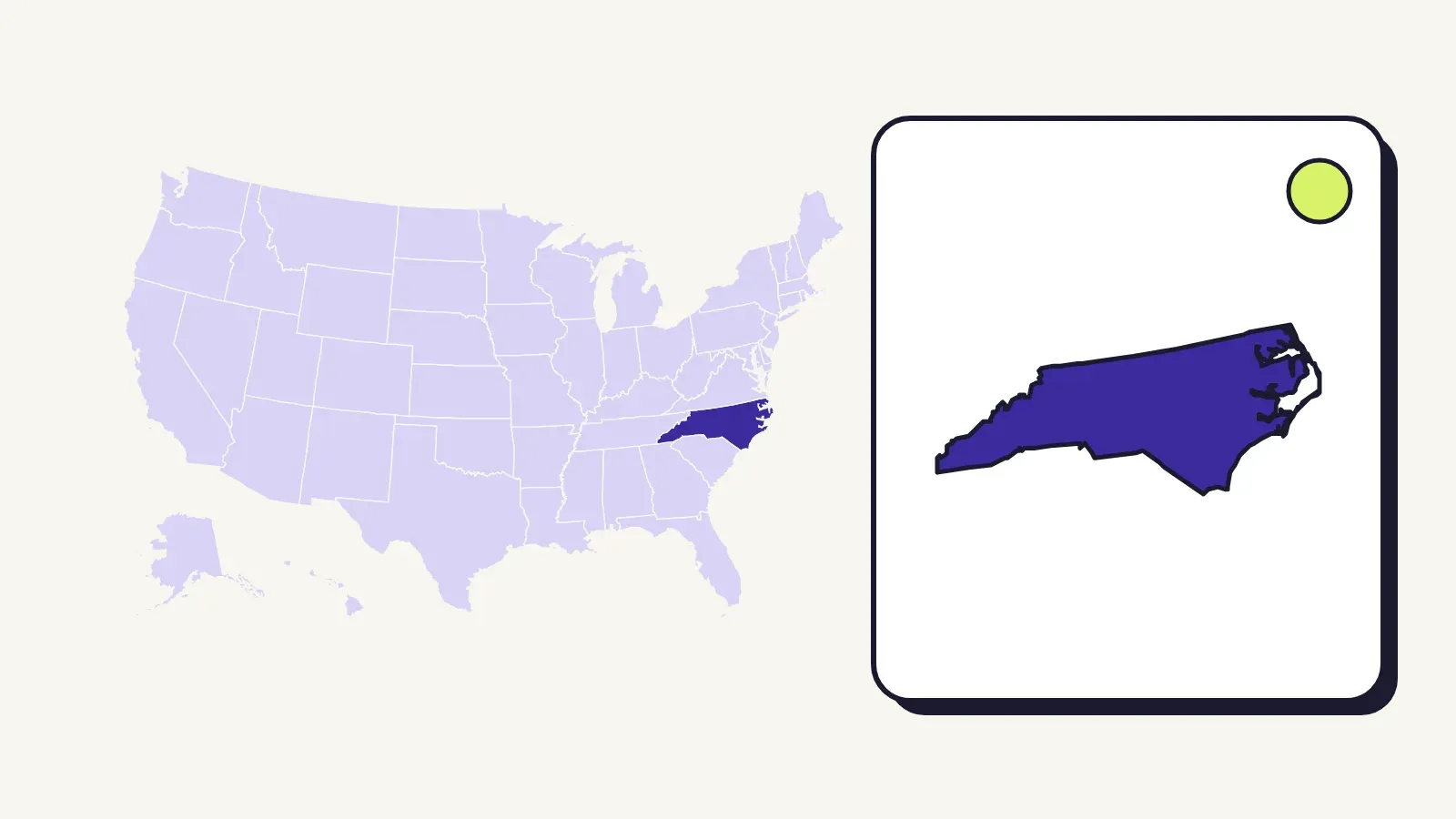
The short version
North Carolina has no law authorizing payday or car title loans, so lenders can't make them legally. Licensed consumer finance companies may charge up to 33% on the first $4,000 of a loan, stepping down to 24% and then 18%. A creditor has three years to sue on a contract debt, and the state generally protects your recent wages from collectors on ordinary consumer debts.
North Carolina lending rules at a glance
Payday lending ended when the law expired
North Carolina once allowed check cashers to make deferred deposit, or payday, loans. That statute, G.S. 53-281, is now marked "Expired," and nothing replaced it. Without it, a small loan has to fit within the state's usury limits or the Consumer Finance Act, and a payday or title loan priced at hundreds of percent fits neither.
The state Attorney General's office describes payday lenders as shut down in North Carolina but still reaching residents online, often through collectors that may be unlicensed or overseas. Under G.S. 53-166, a loan that breaks the Consumer Finance Act is void, and the lender can't collect principal or charges on it.
The rate tiers for licensed finance companies
For loans of $25,000 or less, North Carolina's general rate limit is 16% or the six-month Treasury bill rate plus 6 points, whichever is greater; the Commissioner of Banks publishes the figure monthly. A company that wants to charge more on loans that size must be licensed under the Consumer Finance Act and follow the tiers in G.S. 53-176:
| Part of the unpaid principal | Loans of $12,000 or less | Loans over $12,000 |
|---|---|---|
| Up to $4,000 | 33% a year | 18% a year |
| $4,000 to $8,000 | 24% a year | 18% a year |
| Above $8,000 | 18% a year | 18% a year |
- Loans are capped at $25,000 and must be repaid over 12 to 96 months in substantially equal monthly payments.
- A processing fee of up to $30 is allowed on loans of $3,000 or less; above that, 1% of the amount financed, up to $150. It can't be charged more than twice in 12 months.
- These loans can't be secured by a mortgage or deed of trust on real estate.
A blended rate means a $6,000 loan pays 33% on the first $4,000 of the balance and 24% on the rest, so the overall rate lands in between. Compare that with what a bank or credit union quotes you for a personal loan.
Before you sign with a finance company, ask:
- What is the APR, including the processing fee, and what is the total I'll repay?
- Is any credit insurance or other add-on optional, and what does it cost in dollars?
- Can I pay the loan off early without a penalty?
- What happens, and what does it cost, if a payment is late?
Three years to sue, and wages mostly off-limits
Under G.S. 1-52, most contract claims, including credit card and personal loan debt, must be brought within three years, which is shorter than in many states. If a collector sues after that, the deadline only protects you if you raise it, so respond to the lawsuit rather than ignoring it.
Even with a judgment, a creditor usually can't garnish your paycheck for an ordinary consumer debt. G.S. 1-362 protects your earnings from the 60 days before a collection order when you show they are needed to support your family. Child support, taxes and certain government debts are handled differently. Money in a bank account and other property get separate, more limited exemptions.
Collectors still have to follow federal rules; see debt collectors and your rights.
Who to call about a lender
North Carolina Commissioner of Banks
Licenses consumer finance companies and takes complaints about licensed lenders. Check a license on NMLS Consumer Access.
North Carolina Attorney General
Handles complaints about illegal online payday lenders and abusive collectors at 1-877-5-NO-SCAM.
CFPB
Takes complaints about lenders and debt collectors nationwide and forwards them to the company for a response.
When you complain, include the lender's name and website, the loan contract or screenshots of the offer, and a record of every payment or bank debit. If an unlicensed lender is still pulling money from your account, ask your bank how to stop the payments while the complaint is reviewed.
Common questions
Are payday loans legal in North Carolina?
No. The state's payday lending law expired, and payday loans priced above the state's rate limits aren't allowed, including online.
Are title loans legal in North Carolina?
No law authorizes them. A title loan would have to follow the same rate limits as other small loans, which rules out the triple-digit pricing title lenders use.
How long can a debt collector sue me in North Carolina?
Generally three years for contract debts such as credit cards. See how statutes of limitations work before you pay on an old debt.
Can my wages be garnished for credit card debt in North Carolina?
Generally no. North Carolina protects earnings needed to support your family from ordinary consumer creditors. Child support, taxes and some government debts are exceptions.
Sources
- North Carolina Commissioner of Banks
- G.S. 53-176 — Consumer Finance Act rates and fees
- G.S. 53-166 — Consumer finance license requirement
- G.S. 24-1.1 — Contract interest rates
- G.S. 1-52 — Three-year limit on contract claims
- G.S. 1-362 — Exemption of earnings needed for family support
- North Carolina Department of Justice — Payday lenders
Facts on this page were checked against these sources on October 13, 2026. The general rate limit for loans of $25,000 or less moves with Treasury rates; the Commissioner of Banks posts the current figure each month.
Keep reading
-
Loan type
Payday loan alternatives
Credit union PALs up to $2,000 at 28% APR or less, paycheck advances, payment plans and local help.
-
Debt help
Old debt and time limits
Most states give collectors 3–6 years to sue. What can restart the clock, and why it's not the 7-year credit rule.
-
State law
South Carolina
Payday loans up to $550 with a 15% fee, one at a time; title loans above $600 at filed rates; 3-year limit.