Unsecured loan
Debt Consolidation Loans: Run the Numbers Before You Combine
Rolling several balances into one fixed loan can cut your interest and give you an end date. It can also stretch your debt out and cost more. Here is how to tell which one you're looking at.
By Lendmira Editorial Team Updated 8 min read
- Typical APR
- 7%–36%
- Card APR, Aug 2026
- 22.36%
- Usual terms
- 1–7 years
- Balance transfer fee
- Often 3%–5%
The short version
A debt consolidation loan is a personal loan you use to pay off several debts, usually credit cards, so you owe one fixed payment instead of many. It only saves money if the loan's APR, fee included, is clearly below what you pay now: credit card accounts that were charged interest averaged 22.36% in August 2026. In our example, moving $12,000 of card debt to a 36-month loan at about 15.6% APR saves roughly $2,200 and six months, but only if the cards stay paid off.
What consolidation changes, and what it doesn't
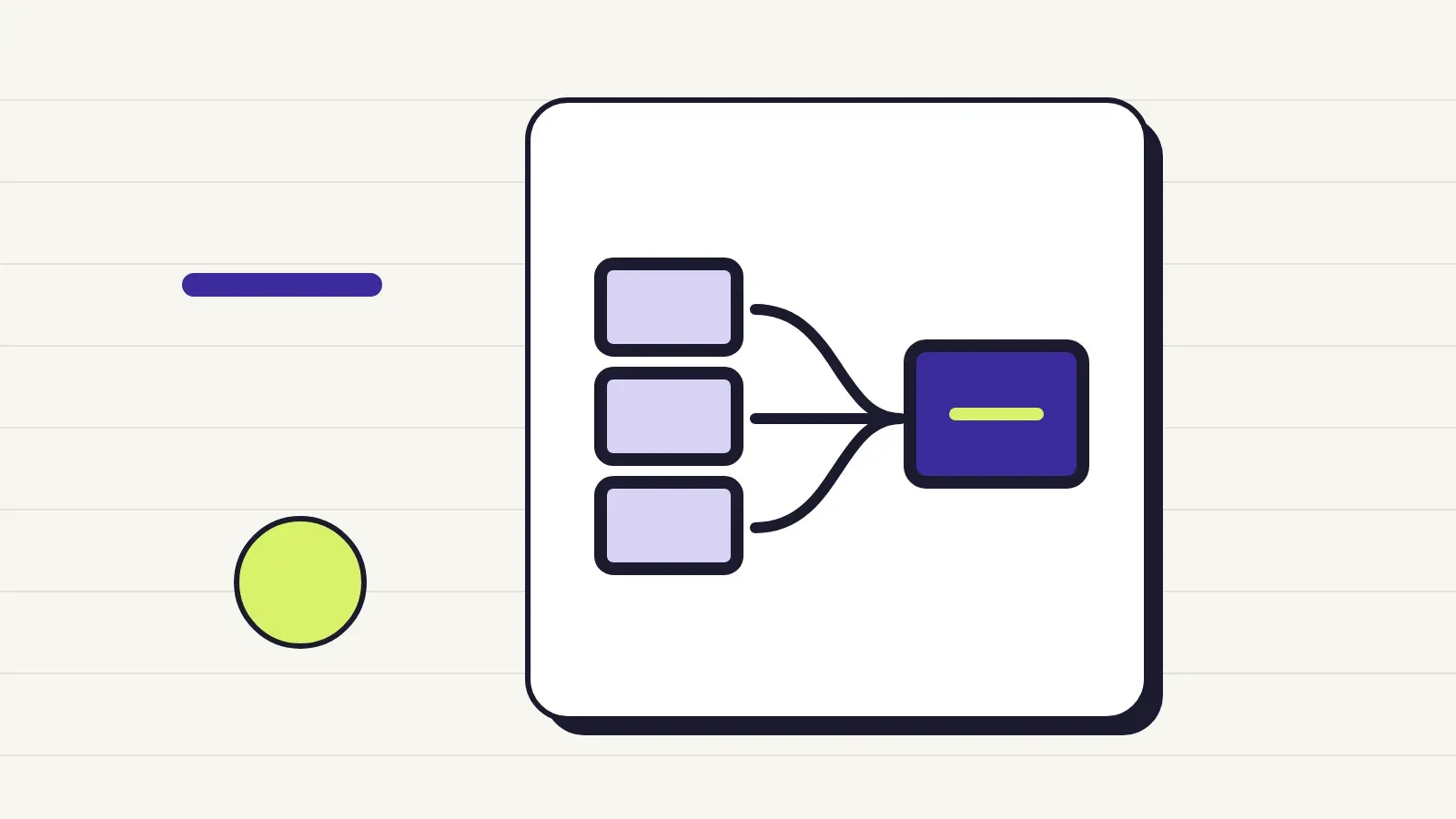
You take out one installment loan, the lender (or you) pays off your card balances or other debts with it, and from then on you make a single monthly payment at a fixed rate until a set end date. Three things can improve at once: the interest rate, the number of bills you juggle, and the certainty of when you'll be done. Credit cards have none of that. A minimum payment on a card can keep a balance alive for many years.
What consolidation doesn't change is the amount you owe. You still owe every dollar; you've only moved it. The CFPB puts it plainly: if you spend more than you earn, a new loan won't fix that, and you may end up with the loan and new card balances.
The math: $12,000 of card debt, two ways
Say you owe $12,000 across three cards at 22.36%, the August 2026 average for accounts charged interest, and you pay about $420 a month. A lender offers a 36-month loan at 12% interest with a 5% origination fee taken out of the proceeds. To have $12,000 arrive, you borrow $12,630; the fee is $631.50.
| Keep paying the cards | Consolidation loan | |
|---|---|---|
| Rate | 22.36% APR | 12% interest, 15.6% APR with the fee |
| Monthly payment | $419.50 | $419.50 |
| Months to debt-free | 42 | 36 |
| Total cost on top of $12,000 | $5,303 interest | $3,102 (interest plus fee) |
Same payment, about $2,200 less in total, and done six months sooner. Now change one assumption. If the only loan you're offered is at 25% APR, you'd pay more than you do on the cards. The break-even point is your current card rate: a consolidation loan has to beat it by a clear margin after the fee. Plug in your own balances with the debt consolidation calculator, and read how origination fees change the APR.
Consolidation loan or balance transfer card?
A balance transfer card moves your card debt onto a new card with a low or 0% introductory rate. It can beat any loan, but only if you can clear the balance before the promotion ends. Fees are usually 3% to 5% of the amount moved.
| Consolidation loan | Balance transfer card | |
|---|---|---|
| Rate | Fixed for the whole term | Low or 0% for an intro period, then the card's regular APR |
| Upfront cost | Origination fee, often 0%–10% | Transfer fee, often 3%–5% |
| Payoff date | Set from day one | None; you set your own pace |
| $12,000 example | $419.50 a month for 36 months | $693 a month to clear $12,480 in 18 months at 0% |
| Main risk | Running the cards back up | A balance left when the intro rate ends |
The CFPB flags two more catches with transfers: new purchases on the same card may get no grace period, and a payment more than 60 days late can trigger a higher rate on the whole balance. If you can afford roughly $700 a month, the card is usually cheaper; if you need a lower fixed payment, the loan fits better. Funditia explains how balance transfer cards work in detail.
Who gets a rate low enough to help
Lenders price consolidation loans like any personal loan: on your credit score, income and existing debt. That creates an awkward fact. People with the most card debt often have high utilization and a lower score, which pushes their loan offers up toward the rates they're trying to escape.
Good or excellent credit (670+)
Indicative APRs of 7%–20% sit well below typical card rates. Consolidation usually saves money if the term isn't stretched.
Fair credit (580–669)
Offers of 18%–30% can land on either side of your card rate. Compare carefully; see loans for fair credit.
Poor credit (below 580)
At 28%–36%, a loan rarely beats your cards. A nonprofit credit counselor's debt management plan or a talk with each card issuer is often the better first call.
Lenders also look at how much of your income already goes to debt payments. Funditia's debt-to-income guide shows how to work out yours before you apply.
When consolidation backfires
- The cards fill up again. Paid-off cards have their full limits available. Spending on them leaves you with the loan plus new balances, which is worse than where you started.
- The term gets stretched. A five- or seven-year loan can have a comfortable payment and still cost more than paying the cards aggressively for three years.
- The fee eats the savings. On a small balance or a short payoff, a high origination fee can cancel out the lower rate.
- Your house becomes the collateral. Consolidating with a home equity loan can mean a lower rate, but the CFPB warns that unsecured card debt becomes debt that can cost you your home.
- It isn't really a loan. Some companies that advertise "consolidation" are debt settlement firms that tell you to stop paying your creditors. Read debt settlement vs. consolidation before you talk to one.
Before you sign
- List every debt with its balance, APR and minimum payment, so you know the rate you have to beat.
- Prequalify with three or more lenders using soft credit checks, and compare APR and total of payments for the same term.
- Ask whether the lender pays your creditors directly. Some do, which keeps the money from being spent on anything else.
- Choose the shortest term you can afford, and confirm there's no prepayment penalty so you can pay extra.
- Have a plan for the cards. Keep them open if you trust yourself, put them away if you don't, and pick a payoff strategy for anything the loan doesn't cover.
Common questions
Does a debt consolidation loan hurt your credit?
Applying adds a hard inquiry, which can lower your score slightly for a while. Paying off revolving card balances usually lowers your utilization, which tends to help, and on-time loan payments help over time.
Is a debt consolidation loan better than a balance transfer?
If you can pay the balance off within the 0% period, a balance transfer card is usually cheaper even with a 3% to 5% fee. If you need a lower fixed payment over several years, a loan is the more realistic choice.
Can I consolidate debt with bad credit?
Sometimes, but offers below 580 often run 28% to 36% APR, which may not beat your cards. Ask your card issuers about hardship programs and consider a nonprofit credit counselor before you borrow.
Should I close my credit cards after consolidating?
Not necessarily. Closing cards can raise your utilization ratio and shorten your credit history. The safer move for many people is to keep them open with a zero balance and stop using them.
Sources
- Consumer Financial Protection Bureau — What is a debt consolidation loan?
- Federal Reserve — Consumer Credit G.19, release of October 7, 2026 (interest rates, August 2026)
- National Credit Union Administration — NCUA Board extends loan interest rate ceiling (2026)
- Bankrate — What is a balance transfer fee? (typical fee range)
Facts on this page were checked against these sources on October 13, 2026. The $12,000 example uses standard amortization at the stated rates; your own savings depend on your balances, offer and payment.
What a debt consolidation loan could cost you
The numbers below are a typical starting point. Change them to match the offer in front of you, then see what lenders would actually quote.
For every $1 you borrow, you repay —. An example, not an offer: your APR depends on your credit, income and state.
Check your rate for this loanNo credit check here
Check your rate
Tell us about the loan and lenders working with Lendmira can show you what they offer. Lendmira doesn't check your credit, and you don't have to accept anything.
- 1 The loan: amount, purpose, credit range, ZIP.
- 2 Your contact details and consent.
- 3 Lenders contact you with options. Compare APRs before you apply.
Lendmira is not a lender, does not make credit decisions and is not paid by you. Lenders that contact you set their own rates and terms and may check your credit before making an offer. How we make money.
Keep reading
-
Debt help
Payoff strategies
Avalanche vs snowball, worked out: highest rate first saved $592 in our three-debt example.
-
Debt help
Settlement vs consolidation
Settlement, debt management plans and consolidation loans compared: fees, taxes and credit damage.
-
Guide
Comparing loan offers
Three $10,000 quotes worked out: the lowest rate had a 14.06% APR, and the lowest payment cost $1,064.76 more.