Payday banned
Borrowing in Connecticut: What State Law Allows
Connecticut's small loan law counts nearly every fee in the rate cap and makes illegal loans uncollectible. Here is what lenders may charge, the new rules for paycheck advance apps, and your protections if a debt goes unpaid.
By Lendmira Editorial Team Updated 7 min read
- Cap, loans under $5,000
- 36% APR, fees included
- Cap, $5,000–$50,000
- 25% APR
- Payday and title loans
- Not allowed
- Time limit to sue on debt
- 6 years
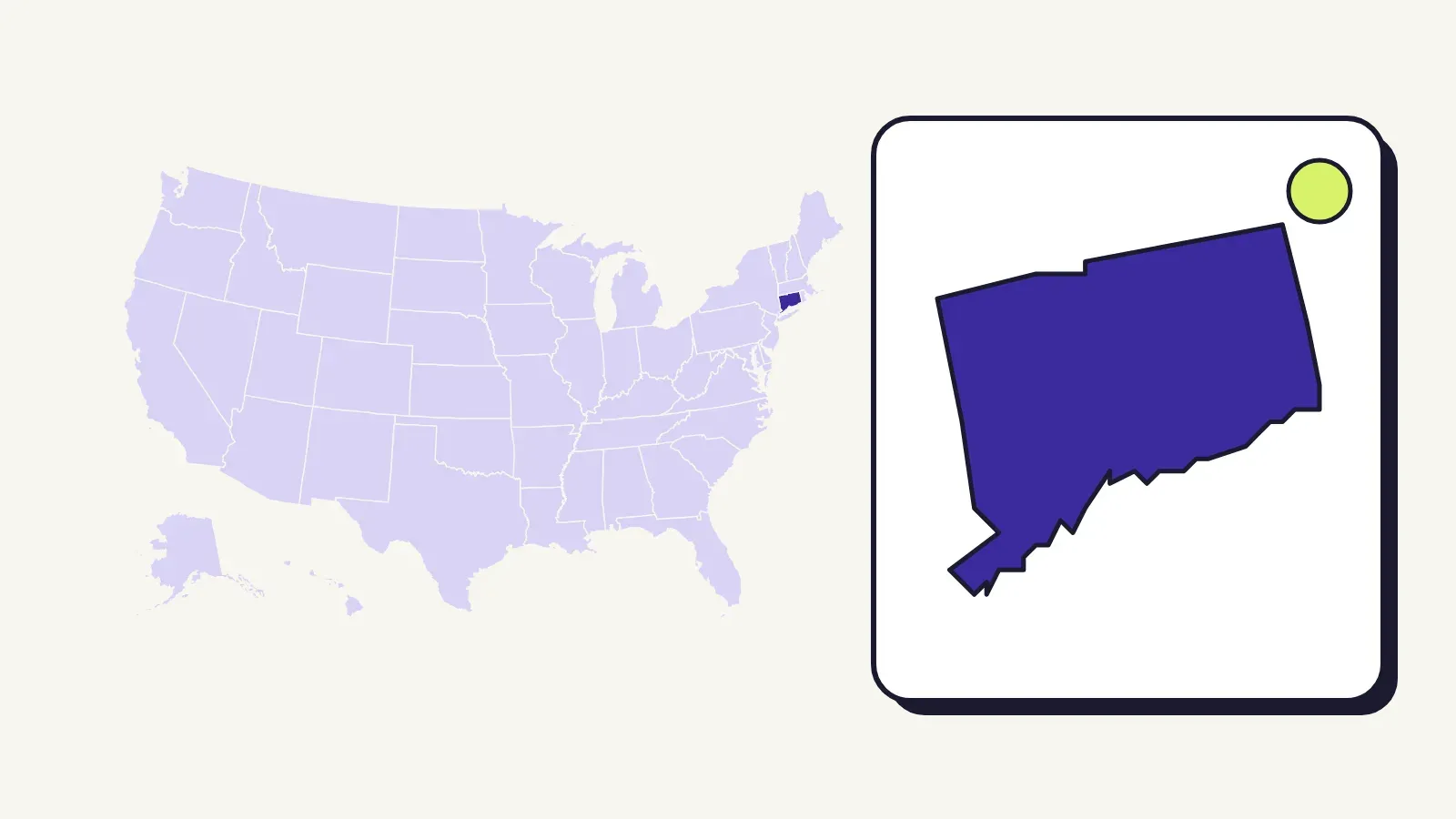
The short version
Connecticut requires a license for consumer loans of $50,000 or less above 12% APR and caps them at 36% under $5,000 and 25% from $5,000 to $50,000, with the APR counting each finance charge. That rules out payday loans, and car title loans are banned outright. A loan that breaks these rules is void. Creditors have six years to sue, and garnishment is capped at 25% of disposable pay.
Connecticut lending rules at a glance
Who needs a license, and the rate caps
Anyone who makes, brokers or buys a "small loan" to a Connecticut borrower needs a small loan license from the Department of Banking, unless the law exempts them. A small loan is any consumer loan of $50,000 or less with an APR above 12%, including advances against future pay, pensions or tax refunds.
| Loan amount | Maximum APR |
|---|---|
| Under $5,000 | 36%, or the Military Lending Act limit if lower |
| $5,000 to $50,000 | 25% |
| Car-secured loan to buy a new vehicle | 15% |
| Car-secured loan to buy a used vehicle | 17% or 19%, by model year |
The APR is calculated the way the federal Military Lending Act does it, and every finance charge goes in: fees, add-on products sold with the loan and amounts you pay to get the credit. A lender can't advertise a 30% rate and pile on fees that push the true cost past the cap.
Why payday and title loans don't exist here
A two-week loan with a flat fee of $15 per $100 works out to hundreds of percent APR, far over the 36% limit, so payday lending isn't possible under a Connecticut license. Car title loans are ruled out a second way: a small loan can be secured by a motor vehicle only if it's a closed-end loan to buy or refinance that vehicle.
Need cash quickly? Our guide to payday loan alternatives covers credit union loans, payment plans and local help.
Fees lenders may and may not charge
- Late fee: only after a payment is 10 days late, and no more than 5% of the payment or $25 a month, whichever is less.
- Returned payment: $20 at most.
- After maturity: interest of no more than 12% a year.
- Open-end lines: an annual fee of no more than $50.
- Not allowed: prepayment penalties, adjustable rates, rate increases on default, and fees the law doesn't name.
To see what a capped rate means in dollars, run the numbers in the loan payment calculator.
New rules for paycheck advance apps
Amendments in 2025 brought earned wage access, where an app advances pay you've already earned, under the small loan law. An advance must be under $750 and no more than you earned for the pay period, and the provider's finance charges are capped at $4 per advance and $30 a month. The law's definition of a finance charge reaches fees whether they're voluntary or not, so a "tip" or an instant-transfer fee should fit within those limits. If an app charges more, or asks you to pay before it confirms it's licensed, complain to the Department of Banking. Even within the caps, $4 to get $100 a few days early is costly if you do it every pay period; a budget fix or a small credit union loan may serve you better.
Six years to sue, and limits on garnishment
A creditor has six years to sue on any contract, written or not, so credit card debt gets six years too. Read how statutes of limitations work before you pay on an old account.
A wage execution can take no more than the lesser of 25% of your weekly disposable earnings or the amount above 40 times the higher of the federal or Connecticut minimum hourly wage. For your rights with collectors, see debt collectors and your rights.
Checking a lender and filing a complaint
- Verify the license on the Department of Banking's license search or NMLS Consumer Access.
- Check the APR against the caps above, remembering that every finance charge counts.
- Contact the Department of Banking's Consumer Assistance unit if a lender overcharges or collects on a loan it shouldn't have made. You can also file with the CFPB.
Common questions
Are payday loans legal in Connecticut?
No. Consumer loans under $5,000 are capped at 36% APR with fees included, and a loan that breaks the cap is void.
Are title loans legal in Connecticut?
No. A small loan can be secured by a car only if it's used to buy or refinance that car, at 15% to 19% APR.
What is the statute of limitations on debt in Connecticut?
Six years for written and unwritten contracts, including credit card debt.
How much of my wages can be garnished in Connecticut?
No more than 25% of your weekly disposable earnings, or the amount above 40 times the higher of the federal or state minimum wage, whichever is less.
Sources
- Connecticut Department of Banking
- Conn. Gen. Stat. § 36a-555 — Small loan definitions (Justia, 2025)
- Conn. Gen. Stat. § 36a-558 — Small loan caps and prohibitions (Justia, 2025)
- Conn. Gen. Stat. § 52-576 — Six-year limit on contracts (Justia)
- Conn. Gen. Stat. § 52-361a — Wage execution limits (Justia)
Facts on this page were checked against these sources on October 13, 2026. The earned wage access rules come from 2025 amendments (Public Act 25-155); check the Department of Banking for licensed providers.
Keep reading
-
Loan type
Payday loan alternatives
Credit union PALs up to $2,000 at 28% APR or less, paycheck advances, payment plans and local help.
-
Debt help
Old debt and time limits
Most states give collectors 3–6 years to sue. What can restart the clock, and why it's not the 7-year credit rule.
-
State law
New York
16% civil and 25% criminal usury caps bar payday and title loans; 3-year limit on consumer debt suits.