Payday allowed
Borrowing in Michigan: What State Law Allows
Payday loans are legal here, but capped at $600 with a fee schedule set in the statute. Car title loans are not allowed at all. Here is what each rule means for you.
By Lendmira Editorial Team Updated 7 min read
- Payday loans
- Allowed, up to $600
- Max fee on a $600 loan
- $76
- Car title loans
- Not permitted
- Time limit to sue on debt
- 6 years
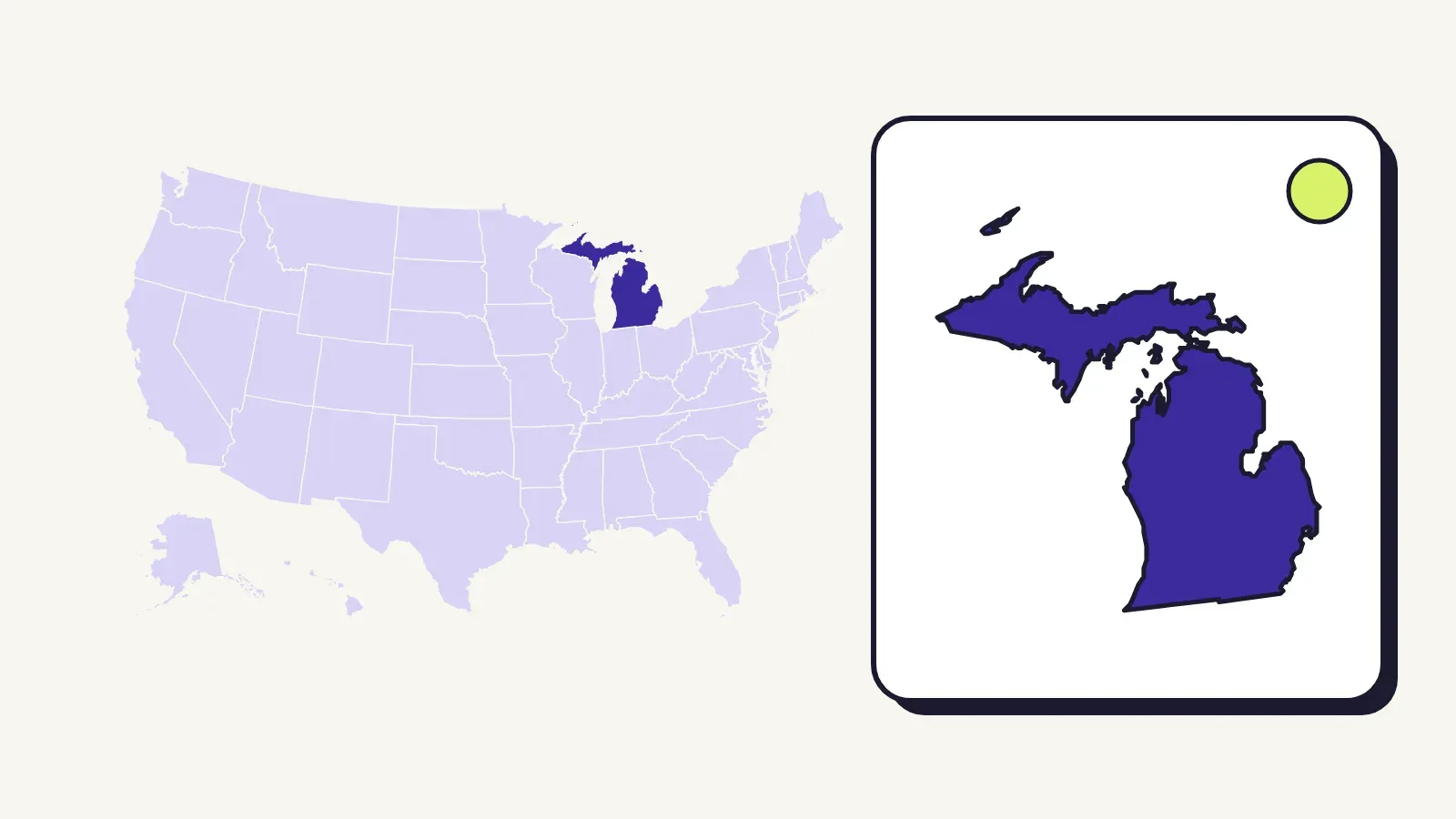
The short version
Michigan allows payday loans, which state law calls deferred presentment transactions, of up to $600 each, with fees that start at 15% of the first $100 and a term of no more than 31 days. You can have only two open at once, and lenders must check a state database first. Car title loans are illegal in Michigan. Creditors generally have six years to sue on a contract debt.
Michigan lending rules at a glance
What a Michigan payday loan can cost
A payday loan in Michigan works like this: you write a check, or authorize a debit, for the amount you borrow plus a fee, and the lender holds it until your due date. The Deferred Presentment Service Transactions Act caps each loan at $600, not counting fees, and sets the fee in steps: 15% of the first $100, 14% of the second, 13% of the third, 12% of the fourth and 11% of the fifth and sixth.
| Amount borrowed | Maximum fee |
|---|---|
| $100 | $15 |
| $300 | $42 |
| $500 | $65 |
| $600 | $76 |
Those fees look small, but the term is short. The Michigan Attorney General's example: a $15 fee on a $100 loan for two weeks equals an APR of about 391%. A typical bank personal loan, by comparison, averaged 11.90% in the Federal Reserve's August 2026 data. Plug any offer into the APR calculator to compare.
Limits on repeat borrowing
- Two loans at most, and not both from the same lender or location.
- Term of 7 to 31 days. A lender can give you more time in a signed agreement, but it can't charge an extension fee or increase what you owe.
- Database check first. Lenders must look you up in the state database before lending. Since September 1, 2025, they may pass on a verification fee of up to $2.40.
- Installment plan after heavy use. If you've taken eight or more payday loans in 12 months, you can ask to repay in three equal payments on your next three paydays. You can't take new payday loans while the plan runs.
- No criminal threats. If you default, the lender can deposit your check and charge a returned-check fee, but it cannot use criminal process to collect.
Why title loans aren't an option
The Michigan Attorney General's office states plainly that auto title loans, where the lender holds your car's title as security, are not permitted under Michigan law. Its warning notes that these lenders typically charge around 25% a month, which works out to about 300% a year. National online title lenders still advertise to Michigan residents. If one offers you a loan, treat that as a reason to walk away, not a loophole.
Rate limits on installment loans
Lenders licensed under Michigan's Regulatory Loan Act can charge interest only up to the rate the Credit Reform Act permits, which is 25% a year for regulated lenders. They may also charge a loan processing fee of up to 5% of the principal on a closed-end loan, capped at a dollar amount ($250 in the statute) that is adjusted for inflation every two years.
Banks are a different story. Depository institutions can set any rate on credit cards, and out-of-state banks, plus online lenders that partner with them, often lend at rates their home state allows. Always read the APR on the disclosure. If your credit is the issue, our guide to borrowing with bad credit shows what rates to expect.
Six years to sue, and federal wage limits
Michigan's statute of limitations for breach of contract is six years (MCL 600.5807), and that period generally covers loan and credit card debt. After it runs, a collector can still ask you to pay but can't win a lawsuit if you raise the time limit. Read how old-debt time limits work before you pay anything on an old account.
A creditor needs a court judgment before it can garnish wages. Michigan applies the federal limit: the lesser of 25% of your disposable earnings or the amount above 30 times the federal minimum wage per week. You have 14 days after a writ is issued to file an objection, and your employer can't fire or discipline you because of a garnishment.
A 36% cap that stalled, and other changes
In March 2024 the Michigan Senate passed a bill (SB 632) to cap payday loan rates and fees at 36% a year. It did not become law, so the fee schedule above still applies. A companion bill did pass: Public Act 46 of 2024 requires the state to publish an annual report on payday lending each October through 2031. In 2026, lawmakers have been considering bills to regulate earned wage access apps separately from payday loans.
How to check a lender or complain
- Confirm the license with the Department of Insurance and Financial Services (DIFS) before you apply. Payday lenders and installment lenders must be licensed.
- Write to the lender first if you think it broke the payday law. It has three days to respond, and if it admits a violation it must refund fees and pay you a penalty.
- File with DIFS (877-999-6442) or the Attorney General's Consumer Protection Team if the lender disagrees or ignores you.
- Know your federal rights if a collector calls: see debt collectors and your rights.
Common questions
Are payday loans legal in Michigan?
Yes. Licensed lenders can make payday loans of up to $600 for no more than 31 days, with fees capped on a sliding scale ($76 on a $600 loan). You can have at most two open at once.
Can I get a car title loan in Michigan?
Not legally. The Attorney General says title loans where the lender holds your title are not permitted under Michigan law, so an offer from a title lender is a red flag.
How long can a creditor sue me for a debt in Michigan?
Generally six years for a contract debt, including most credit card and loan balances. The clock usually starts when you default.
How much of my paycheck can be garnished in Michigan?
For ordinary consumer debt, the lesser of 25% of your disposable earnings or the amount above 30 times the federal minimum wage per week, and only after the creditor wins a judgment.
Sources
- Michigan DIFS — Deferred presentment (payday) FAQ
- Michigan Attorney General — Payday loans
- Michigan Attorney General — Auto title loans
- Michigan Legislature — MCL 445.1854 (Credit Reform Act rate limit)
- Michigan Legislature — MCL 493.13 (Regulatory Loan Act charges)
- Michigan Legislature — MCL 600.5807 (statute of limitations)
- Michigan Legal Help — Garnishment
- Michigan Legislature — Public Act 46 of 2024
Facts on this page were checked against these sources on October 13, 2026. The $2.40 database fee took effect September 1, 2025; DIFS adjusts some payday-related fees from time to time.
Keep reading
-
Loan type
Payday loan alternatives
Credit union PALs up to $2,000 at 28% APR or less, paycheck advances, payment plans and local help.
-

Debt help
Old debt and time limits
Most states give collectors 3–6 years to sue. What can restart the clock, and why it's not the 7-year credit rule.
-
State law
Ohio
Short-term loans up to $1,000 at 28% plus a $30 monthly fee, 91 days to a year; no title loans; 6-year limit.