Payday allowed
Borrowing in Oregon: What State Law Allows
Payday and title loans are legal in Oregon, but under some of the tightest rules in the country. Here is what lenders may charge, how long loans must run and what happens if you can't pay.
By Lendmira Editorial Team Updated 7 min read
- Payday interest cap
- 36% plus one fee
- Max APR with the fee
- 153.77%
- Minimum loan term
- 31 days
- Time limit to sue on debt
- 6 years
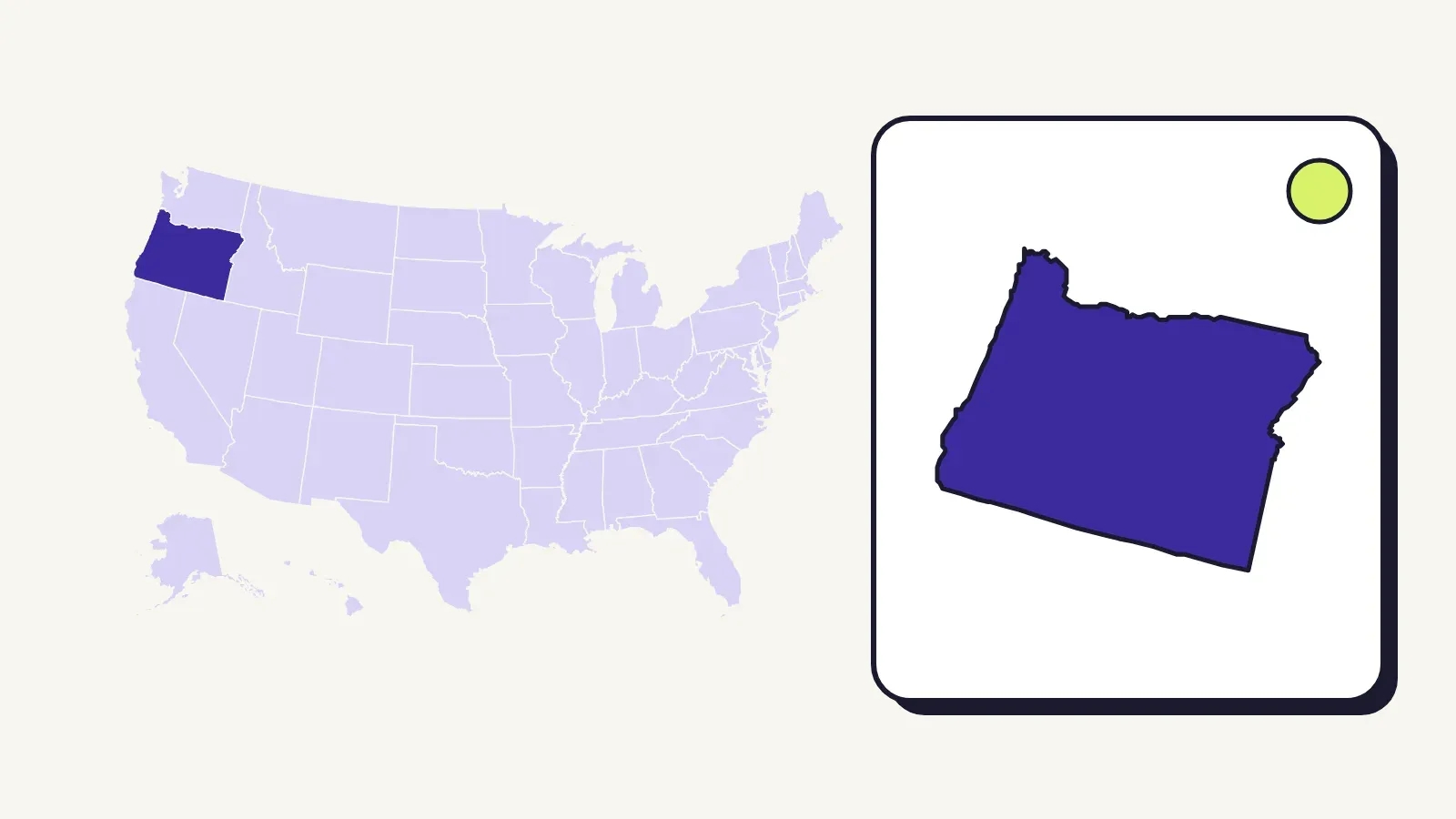
The short version
Oregon allows payday and car title loans from licensed lenders, but caps interest at 36% a year plus a single origination fee of $10 per $100, no more than $30. Loans must run at least 31 days, and the state regulator puts the highest possible APR at 153.77%. Consumer finance lenders face a separate 36% ceiling, and creditors generally have six years to sue on a debt.
Oregon lending rules at a glance
The rules every payday loan must follow
Payday lenders in Oregon are licensed by the Division of Financial Regulation (DFR) under chapter 725A of the Oregon Revised Statutes. The core limits are short and strict:
- Interest: no more than 36% a year.
- One fee: a single origination fee of $10 per $100 borrowed or $30, whichever is less, across the loan and all its renewals.
- Term: at least 31 days and no more than 60 days.
- Renewals: no more than two. After that, you repay the balance and interest.
- Cooling-off: no new payday loan within seven days after you repay the last one.
Because the fee is capped in dollars, the cost stays readable. DFR's own examples: borrowing $100 costs at most $113.06 in total, and $300 costs at most $339.17. Spread over a 31-day loan, that's an APR of up to 153.77%, still far more than a credit union loan.
Title loans run on the same rules
A title loan, secured by your car, boat, RV or manufactured home, carries the same 36% interest cap, the same one-time fee, a 31-day minimum term and the same two-renewal limit. A lender may hold only one outstanding title loan per title, and it can't demand your keys.
The car is still at risk. If you default, the lender can repossess it, so treat a title loan as a last resort and compare payday loan alternatives first.
Installment loans from consumer finance lenders
Personal loans of $50,000 or less from non-bank lenders require a consumer finance license under chapter 725. The finance charge, stated as an APR, can't exceed the greater of 36% or a benchmark of 30 percentage points above the Federal Reserve's discount window primary credit rate, which the DFR director sets each December for the following year.
Lenders may also charge reasonable fees the department oversees, such as late fees. Banks chartered in other states can often lend at their home state's rates, so compare the APR on each disclosure; our guide to comparing loan offers shows how.
Debt collection deadlines and garnishment limits
Under ORS 12.080, a creditor has six years to sue on a contract, written or implied, and that period covers credit card debt as well. After the deadline passes, a collector can still ask you to pay but can't win a lawsuit if you raise the time limit. Read how statutes of limitations work before you make a payment on an old account.
If a creditor wins a judgment, Oregon exempts at least 75% of your disposable earnings from garnishment, and ORS 18.385 adds a minimum dollar amount per pay period that can't be taken. Child support and some government debts follow different rules. For what a collector may and may not do before any lawsuit, see debt collectors and your rights.
Before you borrow, and if something goes wrong
- Look up the lender with DFR's license search. Payday, title and consumer finance lenders each need their own license.
- Read the written agreement. It must show the fee, the APR, the due date and what happens if you pay late or default.
- Call or file with DFR through its consumer hotline or online complaint form if a lender adds fees, rolls a loan over more than twice or threatens you.
Common questions
Are payday loans legal in Oregon?
Yes, from licensed lenders. Interest is capped at 36% a year plus one origination fee of up to $30, and the loan must run at least 31 days.
What is the maximum APR on a payday loan in Oregon?
The Division of Financial Regulation says the highest possible APR, with the maximum fee and interest, is 153.77%.
How long can a creditor sue me for a debt in Oregon?
Generally six years from the default, including credit card debt.
Can I get a car title loan in Oregon?
Yes. Title loans follow the payday rules: 36% interest plus one fee, a 31-day minimum term and no more than two renewals. The lender can repossess the vehicle if you default.
Sources
- Oregon Division of Financial Regulation — Payday and title loans
- Oregon Division of Financial Regulation — Payday loans consumer guide (PDF)
- Oregon Revised Statutes chapter 725A — Payday and title loans (2025 edition)
- Oregon Revised Statutes chapter 725 — Consumer finance loans (2025 edition)
- Oregon Revised Statutes chapter 12 — Limitations of actions (2025 edition)
Facts on this page were checked against these sources on October 13, 2026. The consumer finance benchmark rate is reset by DFR order each December, so the ceiling on larger loans can change from year to year.
Keep reading
-

Loan type
Payday loan alternatives
Credit union PALs up to $2,000 at 28% APR or less, paycheck advances, payment plans and local help.
-

Debt help
Old debt and time limits
Most states give collectors 3–6 years to sue. What can restart the clock, and why it's not the 7-year credit rule.
-
State law
Washington
Payday loans up to $700 with fees capped at 15%; 8 loans a year; no title loans; 25% cap on consumer loans.