Payday allowed
Borrowing in Washington State: What the Law Allows
Washington allows payday loans but fences them in with a size limit, a fee cap, an annual loan count and a database that enforces it. Title loans have no legal path here, and licensed installment lenders are held to 25%.
By Lendmira Editorial Team Updated 7 min read
- Max payday loan
- $700 or 30% of income
- Payday fee cap
- 15% of first $500
- Payday loans per year
- 8 in 12 months
- Time to sue, written contract
- 6 years
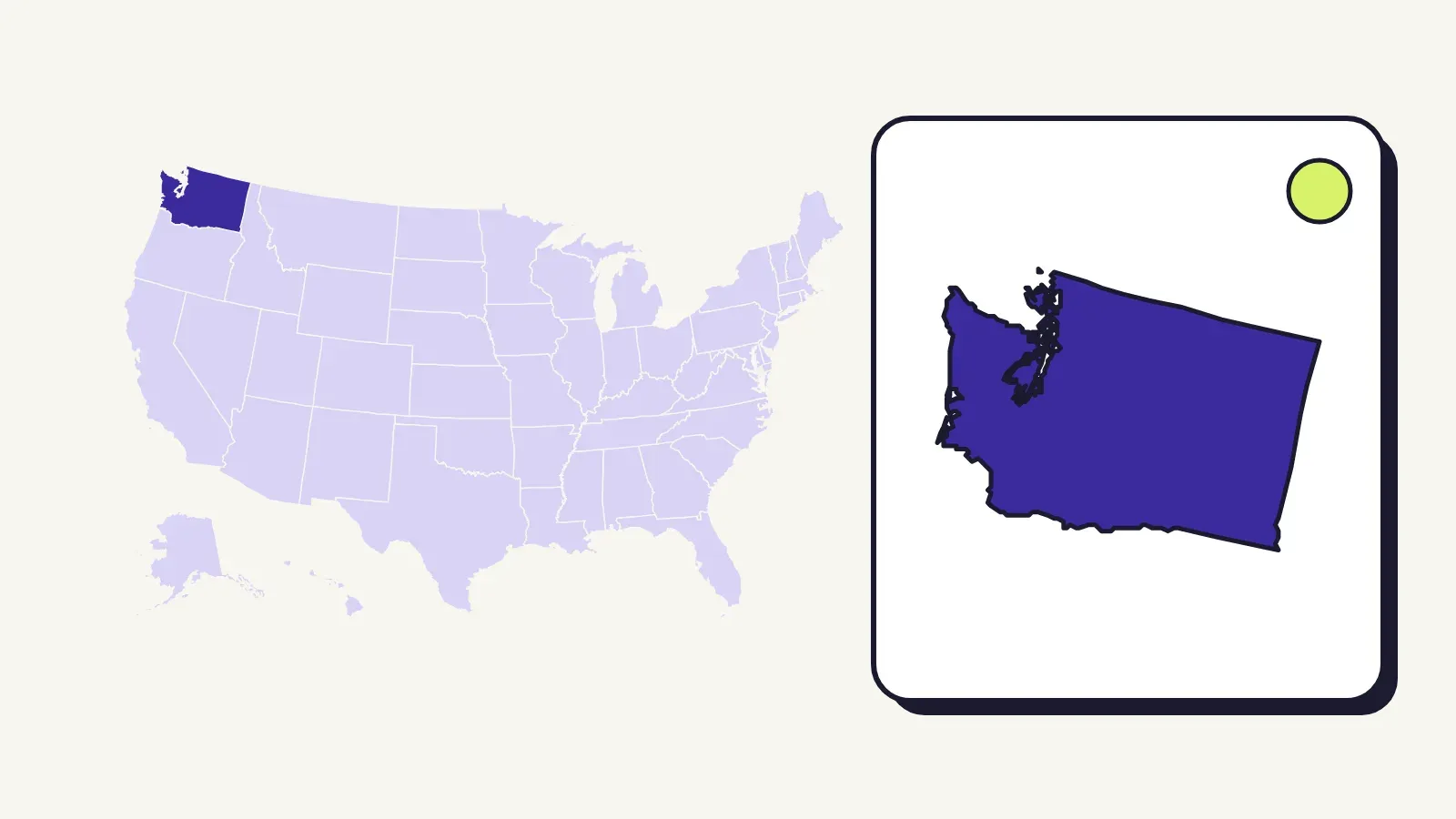
The short version
Washington lets licensed lenders make payday loans of up to $700 or 30% of your gross monthly income, whichever is less, with fees of up to 15% on the first $500 and 10% above that. You're limited to eight payday loans in 12 months, enforced by a statewide database. Car title loans aren't authorized, and Consumer Loan Act lenders may charge no more than 25% a year. Creditors have six years to sue on a written contract.
Washington lending rules at a glance
Payday loans, by the numbers
Payday loans are made by check cashers with a small-loan endorsement from the Department of Financial Institutions (DFI), under chapter 31.45 RCW. The key limits:
| Rule | Limit |
|---|---|
| Maximum amount | $700 or 30% of your gross monthly income, whichever is less, across all lenders |
| Fees and interest | Up to 15% of the first $500 and 10% of any amount above $500 |
| Longest term | 45 days from the date of the loan |
| Number of loans | No more than 8 in any 12-month period |
| Cancellation | One day to cancel the loan |
The fee cap still produces a high APR. DFI's own example: a $500 loan for 14 days at the maximum fee of $75 has an APR of 391%. Every loan is reported to a statewide database, which is how lenders check the eight-loan limit and the $700 cap before they lend.
At the full $700, the most a lender can charge is $95: $75 on the first $500 plus $20 on the remaining $200. The due date generally has to fall on or after your next payday, with special rules when that payday is only a few days away. If your gross monthly income is $2,000, 30% of it is $600, so that is your ceiling even though the dollar cap is higher.
If you can't repay on the due date
You can ask the lender to convert the balance into an installment plan, with no extra fees. While you're on the plan you can't take out a new payday loan. A longer term can also be agreed, but only without added fees or interest.
Before borrowing at all, compare alternatives to payday loans. A federal credit union small-dollar loan is limited to 18% APR on most loans through September 10, 2027.
Title loans and the 25% consumer loan cap
Washington has no statute authorizing car title loans, so title lenders have no legal path here. Nonbank installment lenders are licensed under the Consumer Loan Act, and RCW 31.04.105 limits them to simple interest of 25% a year.
On top of interest, a licensee may charge an origination fee of up to 4% of the first $20,000 and 2% of any amount above that, plus certain third-party fees, and a late charge of up to 10% of an installment that's at least 10 days overdue. Fees raise the APR above the note rate; see how origination fees work before you compare offers. Banks and credit unions are regulated separately.
Time limits and garnishment
Under RCW 4.16.040, a creditor has six years to sue on a written contract or an account receivable. Oral contracts have three years. Credit card debt is usually pursued as a written contract or an account receivable, so expect six years. Read how statutes of limitations work before you pay on an old debt.
Washington protects more of your paycheck than federal law. For consumer debt, RCW 6.27.150 exempts the greater of 80% of your disposable earnings or 35 times the state minimum hourly wage each week. Because the state minimum wage is far above the federal one, lower-paid workers may have all of their pay protected.
Checking a lender and complaining
- Confirm the license with DFI or on NMLS Consumer Access. An online lender that isn't licensed in Washington shouldn't be lending to you.
- Get the cost as an APR and in dollars, and check the loan doesn't exceed $700 or 30% of your gross monthly income.
- File a complaint with DFI if a lender breaks the rules, and with the CFPB or the Attorney General for abusive collection. Learn your rights with debt collectors.
Common questions
Are payday loans legal in Washington State?
Yes, from DFI-licensed lenders, up to $700 or 30% of gross monthly income, with fees of up to 15% on the first $500 and a limit of eight loans in 12 months.
Are car title loans legal in Washington?
No state law authorizes them. Licensed consumer lenders are limited to 25% simple interest a year.
How long can a debt collector sue me in Washington?
Six years on a written contract or account receivable, and three years on an oral contract.
How much of my paycheck can be garnished in Washington?
For consumer debt, the greater of 80% of disposable earnings or 35 times the state minimum wage per week is protected; only the rest can be taken.
Sources
- Washington DFI — Payday loans
- RCW 31.45.073 — Small loans: amount, fees, term
- RCW 31.04.105 — Consumer Loan Act licensee powers and rates
- RCW 4.16.040 — Six-year limitation on actions
- RCW 6.27.150 — Earnings exempt from garnishment
- NCSL — Payday lending state statutes
- Washington House Bill Report, HB 2083 (2024)
Facts on this page were checked against these sources on October 13, 2026. The garnishment exemption is tied to Washington's minimum wage, so the protected amount rises when the state adjusts that wage.
Keep reading
-
Loan type
Payday loan alternatives
Credit union PALs up to $2,000 at 28% APR or less, paycheck advances, payment plans and local help.
-
Debt help
Debt collectors and your rights
Validation notices, the 30-day dispute window, the 7-calls-in-7-days rule and how to complain.
-
State law
Oregon
Payday and title loans capped at 36% interest plus one fee of up to $30; 31-day minimum term.